Keeping context with a conversation.
A useful AI conversation can be difficult to place a few months later. The exchange may still be there, while its project, purpose or relationship to other work is less clear.
Notes on recording context in AI conversations, with examples and links to the open-source project.
A useful AI conversation can be difficult to place a few months later. The exchange may still be there, while its project, purpose or relationship to other work is less clear.
Saving a transcript preserves the conversation. A short note about its purpose can make that record easier to interpret later.
A decision can make sense in one setting and be misleading in another. Recording what a session was trying to achieve gives a later reader something to check against.
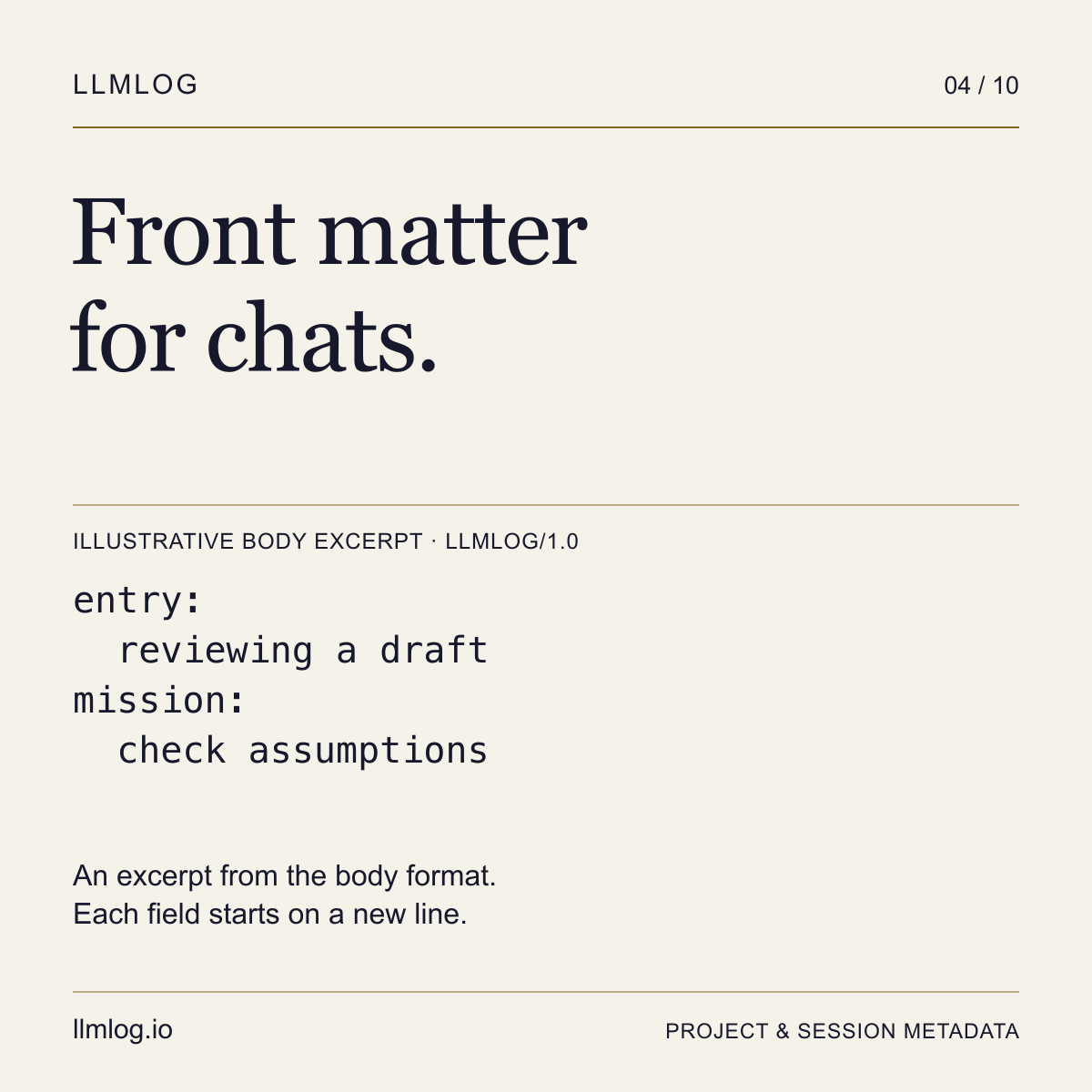
LLMLOG describes itself as front matter for chats: a short, recognisable text block within a conversation.
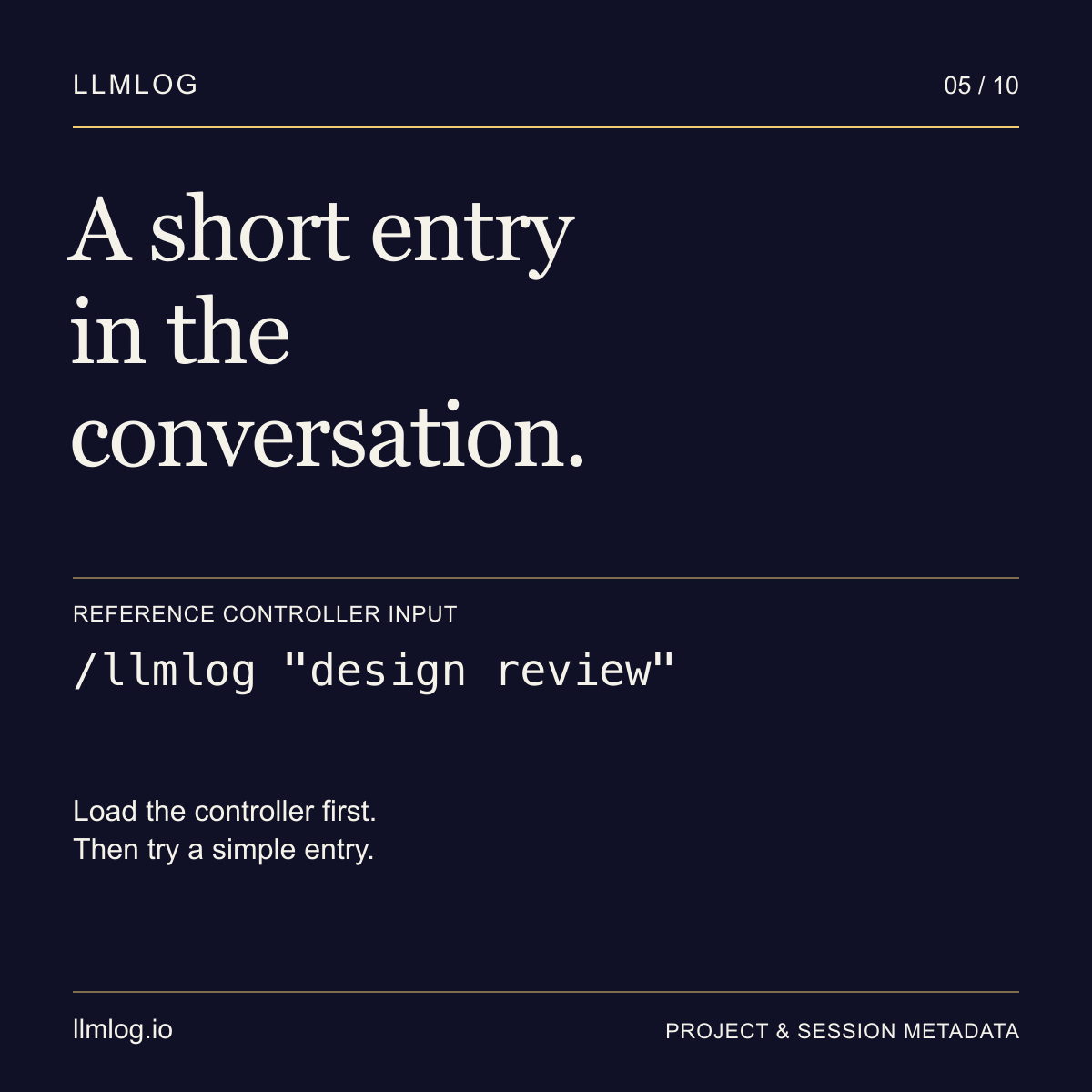
The LLMLOG reference controller is a plain-text prompt. Copy it into a suitable chat session, then try a short entry such as:
A project name stored only in a platform's interface may be absent from the transcript someone keeps elsewhere.
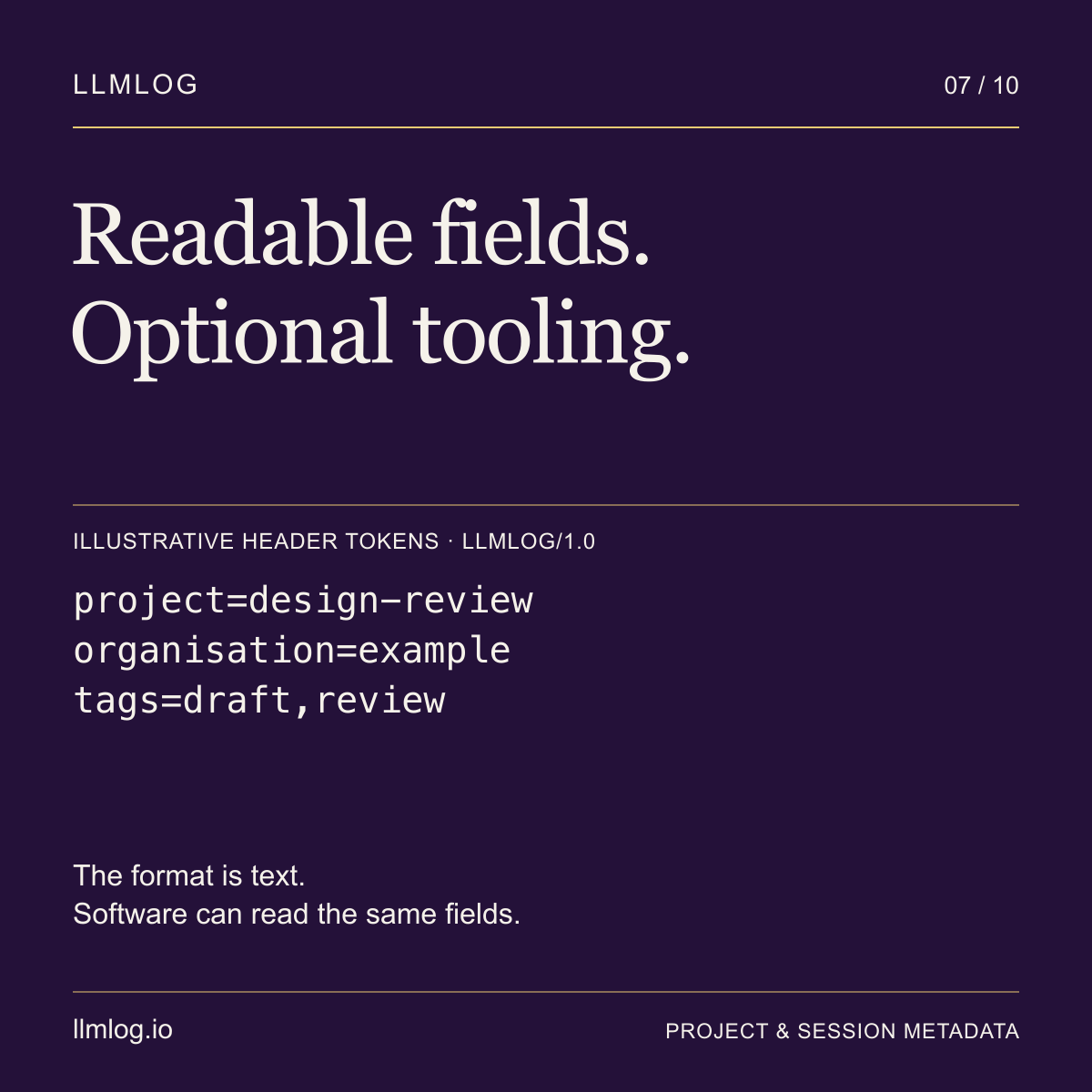
LLMLOG uses visible text fields, so a person can read a log entry without a dedicated application. Optional software can extract the same information.
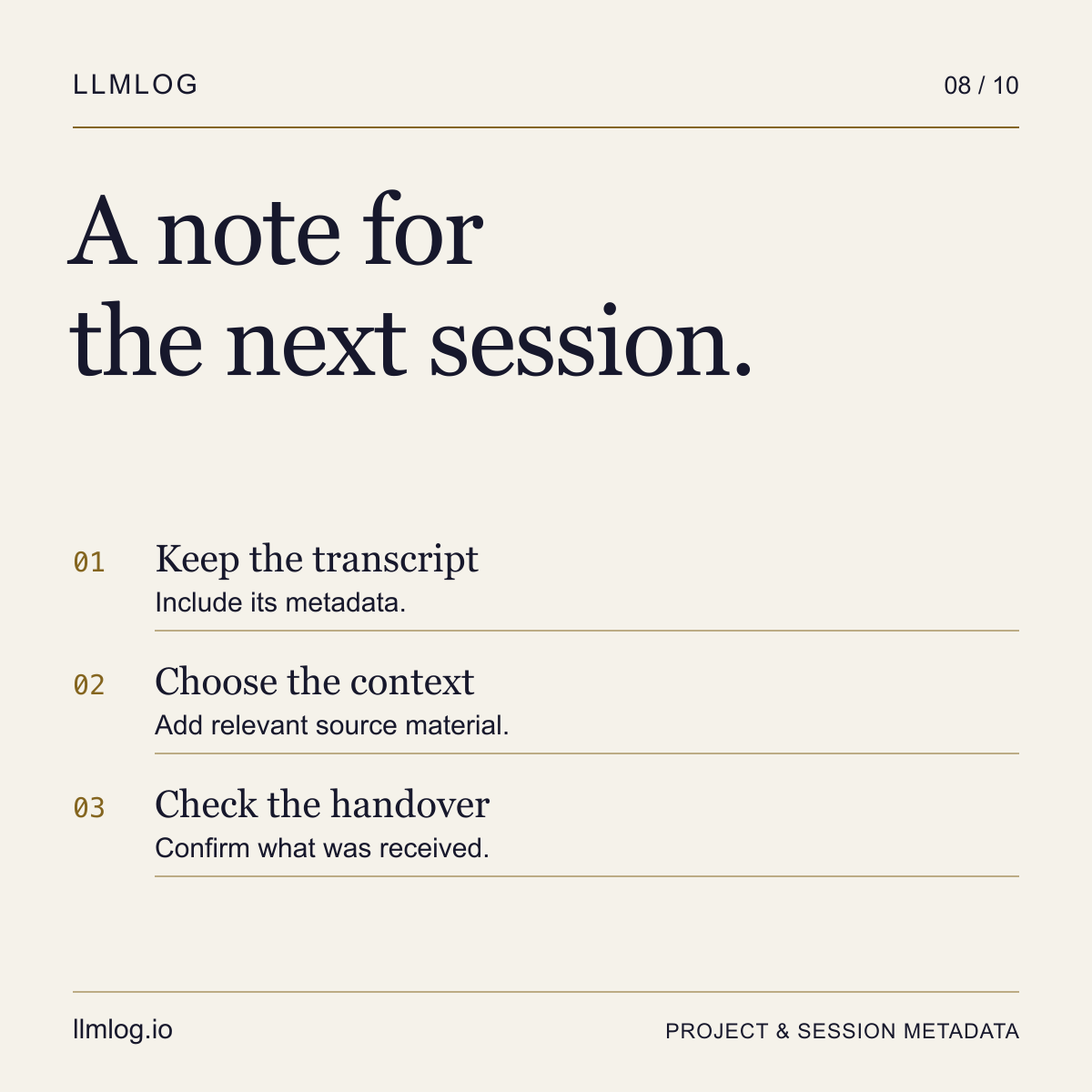
Moving work between AI tools often includes a small handover: what the project is, what the previous session was for, and what remains useful.
Someone returning to an AI-assisted piece of work may need more than the final answer. They may need to know which project it concerned and what the session was trying to achieve.
LLMLOG is a small open-source project for embedding descriptive project and session metadata in AI conversations.